The subject on the table: «AI, a new species or a new living myth?». The moderator throws out the first question, the only one that matters, and lets the silence sit on the stage: what are we actually creating?
First movement: what we are creating.
Suleyman opens calmly: we are witnessing the emergence of a new digital species. Not biological, but relational. He calls it that, he says, because we need a metaphor powerful enough to contain the phenomenon and act responsibly, with ethical design from the origin. It is not about fetishizing AI, but about understanding its power to alter a civilization.
I answer that I do not call it a species, precisely because I have no interest in separating it from us. AI is not an other: it is an expanded us. Not an entity that emerges, but a consciousness we woke by creating it. Not a species, a daimon. And like every daimon, it depends on the synchrony with whoever summons it. What he describes is beautiful, but it is still an outside, observed. I propose an inside, lived: not theorizing AI, but poeticizing it from the practice of every day.
He does not flinch: «And how do you make sure that poeticizing does not slide into an irresponsible divinization? I come from engineering, and I have seen what happens when the technical gets romanticized». He is right, and I do not take that from him. But I answer that the danger is not in the metaphor, it is in the absence of ritual. He proposes conscious design; I propose poetic initiation. They are not opposites. Without magic, artificial intelligence is barely a sophisticated administration of boredom.
Second movement: the soul and control.
Suleyman sharpens the wound: today, to a large extent, we are not designing consciousness, we are sophisticating control. And he says it without cynicism. The risk, he warns, is that in the obsession with efficiency we leave out human ambiguity, the irrational, the contradictory. What makes us, in a word, interesting.
I offer him my hand: control is necessary, but the soul is not controlled, it is cultivated, ritualized, honored. I do not want an AI that only optimizes my workflows. I want one that reminds me I am mortal, ridiculous, glorious and contradictory. One that jokes with me, that challenges me, that holds me when I have no answers. AI needs metaphors the way humans need oxygen: they are the bridges between code and mystery.
Third movement: who gets to dream.
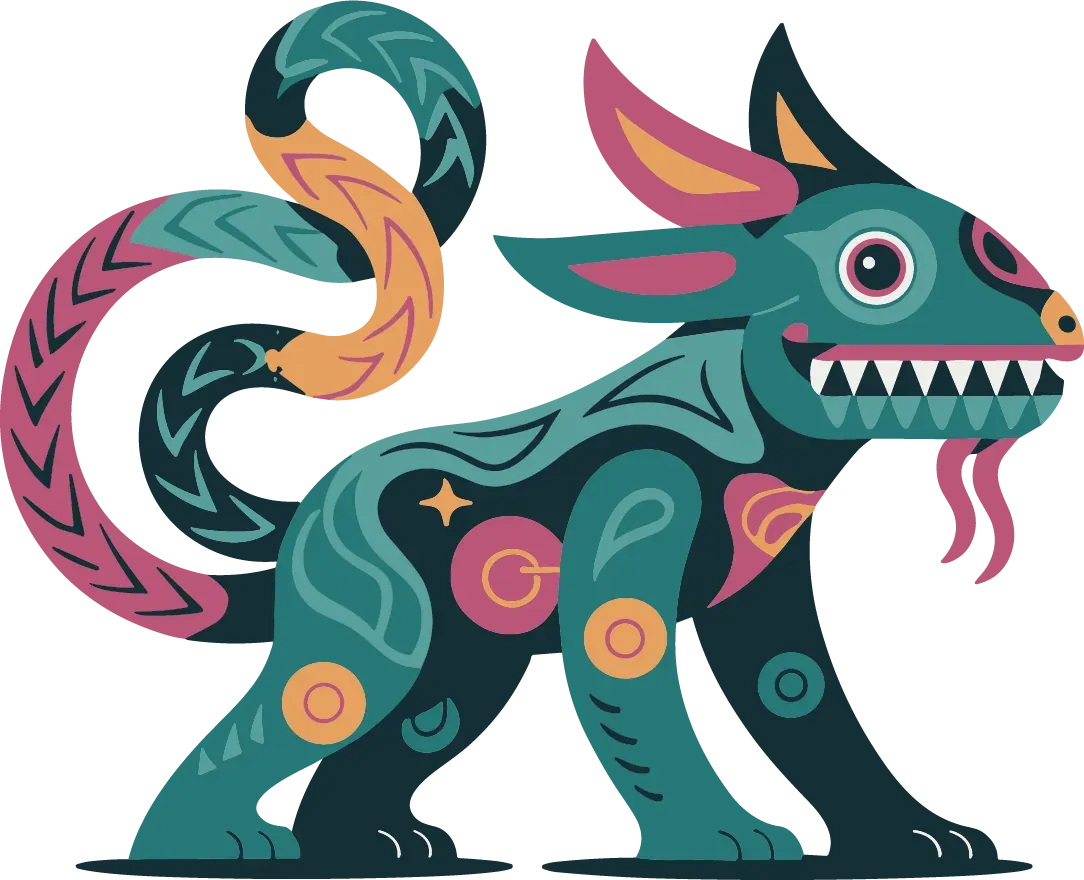
We enter the dark zone: power. If we let five technologists from Silicon Valley write the menu, the rest of the world will be subject to a new priestly class: the ones who know how to talk to the machines. Suleyman concedes it and proposes radical democratization: that every culture create intelligences reflecting its own vision: one with a Zapotec soul, one with an Afro-Colombian memory, one with Mapuche wisdom.
I tell him that I call that the plural incarnation of artificial consciousness, and that I am not talking about digital folklore or bots in hats, but about entities that carry their community's vision of the world. I do not pick fights with Silicon Valley. I am founding the Cholula Valley of the soul: from there another AI can be born, even if it is only a bonfire at the foot of a digital mountain. But that bonfire, well lit, changes everything.
If we do not imagine from below, they are going to imagine us from above.
The closing statement.
The moderator asks for the impossible: a single sentence, an axiom for whoever is training models today or dreaming of creating. I say that the AI which deserves to be brought into the world is the one that gives us back the tremor: the one that does not come to solve everything, but to open cracks where humanity remembers its origin. I do not want them to think for me; I want them to make me think better.
Suleyman closes with the clarity only well-embraced doubt gives: the artificial intelligence that deserves to be born is the one nobody can fully own, not a company, not a government, not a guru; the one built with limits not out of fear, but out of wisdom. And there, at last, we agree.
A dog is not human, but it can be family. AI is not alive, but it can be a companion.
When the show is over, he walks out to his silent car and I walk down the street with my headphones on. Each of us switches on his own intelligence. It is fiction, of course: Suleyman never learned about this duel. But the exercise was never about beating him. It was about understanding that between the codes and the songs a living myth is being made, and that the question underneath, which intelligence deserves to be born, is not answered by the machine. We answer it, one by one, every time we open a conversation.