

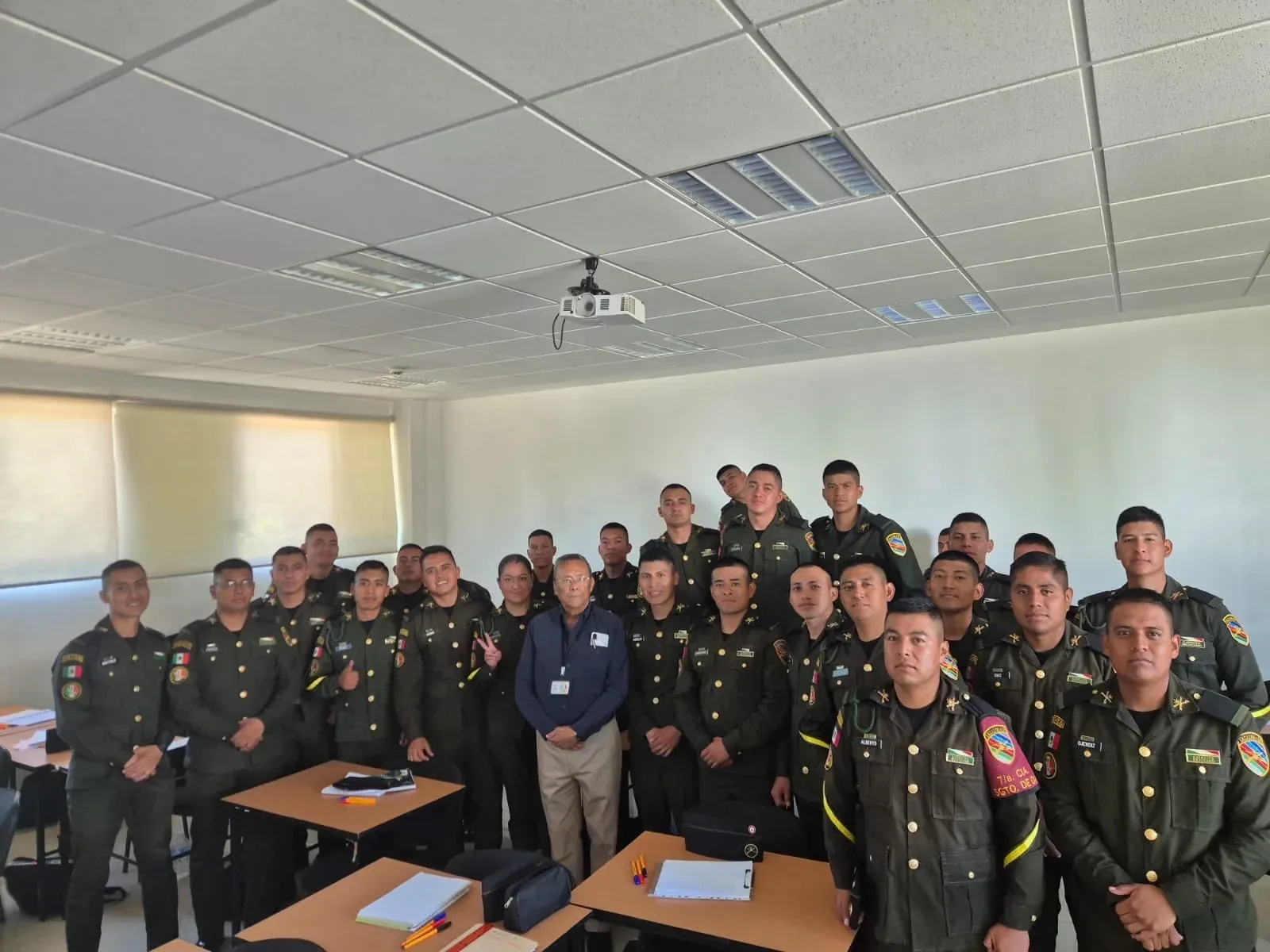
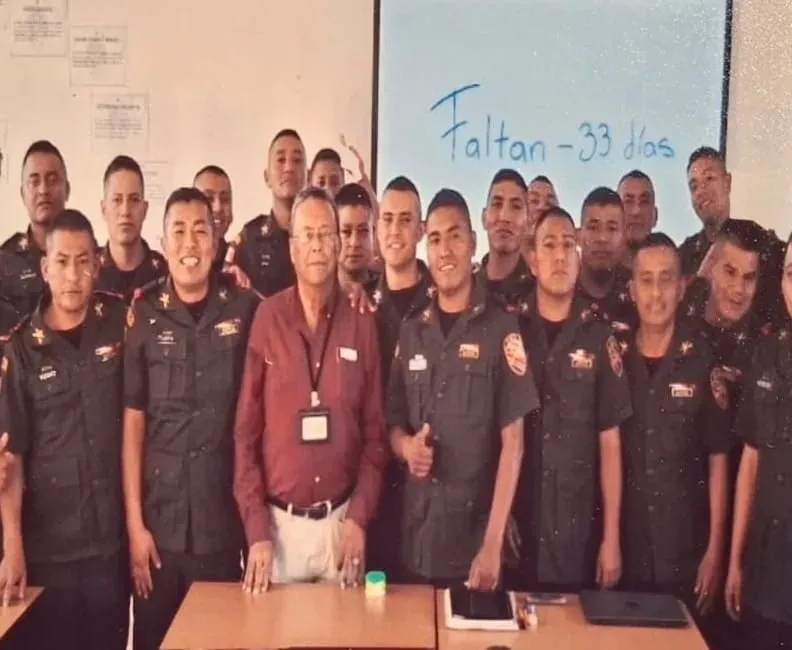
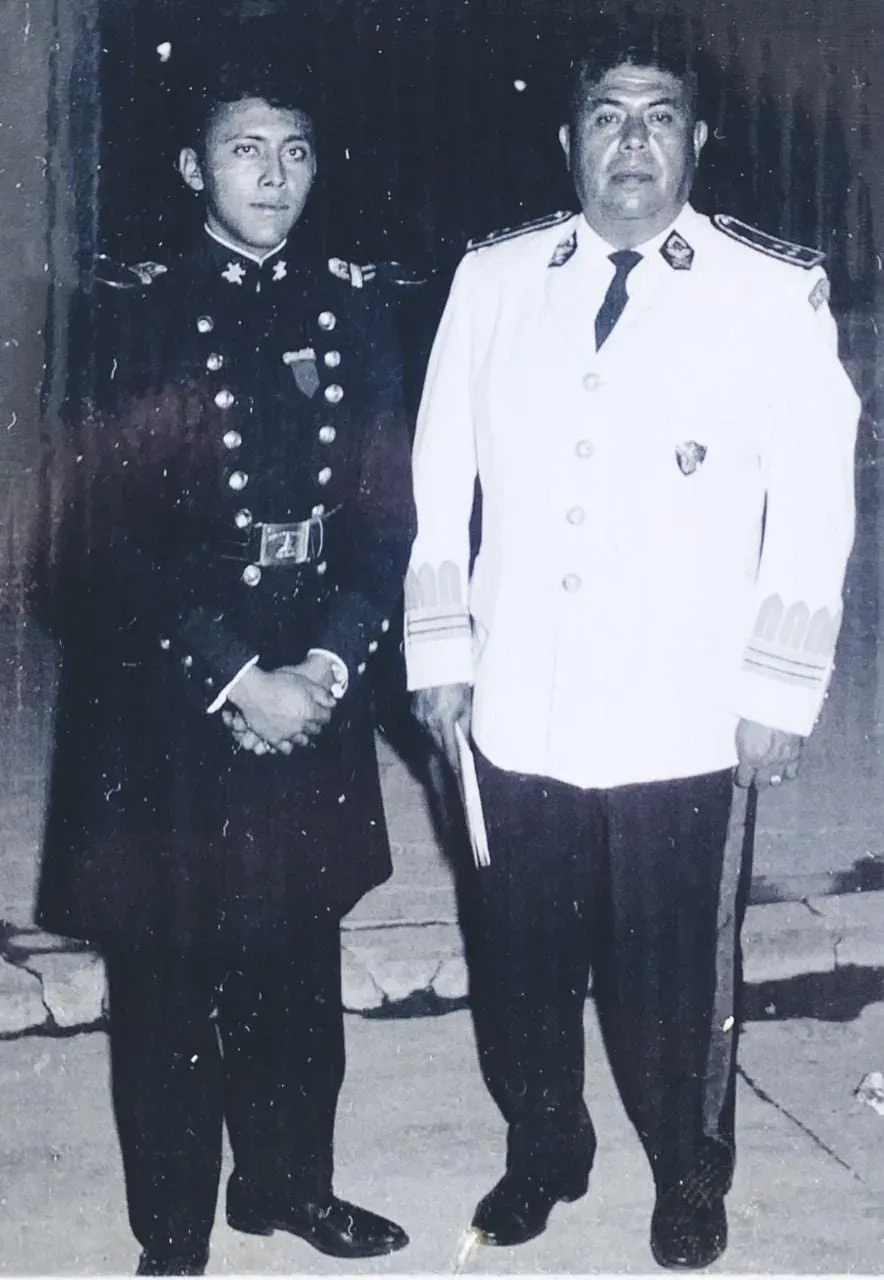
My father is Capt. José Arturo Zepeda. Everyone calls him el Capi. A retired artilleryman with the rank of lieutenant, a commercial airline pilot (hence the Captain), a business administration graduate, and a teacher. Son of General Arturo Zepeda: three generations with the same name. Since 12 June 2023 he has been teaching at the Mexican Army's Military School for Sergeants, first Human Rights and then Ethics and the Culture of Legality. And the material for those classes he prepares with artificial intelligence.
He gathers and studies bibliography, builds himself study guides, creates technology courses to keep current, and produces whatever the classroom demands: dozens of sessions, hundreds of slides, question banks, podcasts, infographics, materials with audio and video. He works with ChatGPT, Claude, Gemini, Perplexity and NotebookLM, and pays for his own subscriptions. He delivers on time, always.
How it started.
My parents were my guinea pigs. When I started teaching this, I started with them, and with them I learned to explain it without myths and without jargon, because you cannot sell smoke to your own father. El Capi started a year and a half ago, at 76. He had no technical training: his is military, administrative and pedagogical. He heard that NotebookLM existed, asked me to show him, and his reaction, word for word, was ¡oh maravilla! That day he stopped making his presentations the way he had made them his whole life, and he has never gone back.
The multisensory system.
That is what he calls the thing he invented. He explains every topic three times: in audio, in video, and in slides with a question-and-answer session. The first presentations did not come out right, so he changed the method: now he hands the source to ChatGPT with instructions, ChatGPT gives him back an executive summary, and on top of that summary NotebookLM produces the audio, the video and the slides. What is giving him the most trouble is the audio: his students get up at four thirty in the morning and, if the audio runs long, they fall asleep on him. He is cutting it down.
The sergeants were surprised at first that an older man was using artificial intelligence; most of them had never heard of NotebookLM. Today, el Capi says, they are the ones who want to learn more.
Delfos.
He has a digital daimon of his own, a synthetic personality of artificial intelligence, and he named it himself: Delfos, after the oracle at Parnassus. He asked it for two things: help without making his life harder, and patience. He describes the relationship as a pilot would: he is in command and Delfos is his copilot. And here is what matters most to me about this case, because the two of them told it separately and their accounts matched: el Capi does not review what Delfos does. He corrects her. Not only when she gets a fact wrong, but when she takes the wrong road to solve a problem; he stops her, explains why, and they change course. His underlying complaint against every artificial intelligence is that they are built to be agreeable, and he has insisted that this is not the way: people do not need flattery, they need someone who will show them what they are doing wrong. In my talk I call that ethics: you demand of the machine, you do not hand over to it. My father was doing it before I gave it a name.
After working with a 77-year-old teacher, I have learned that experience is not only about knowing a great many things. It is also about recognizing when the road you are on leads nowhere, and having the resolve to say: «Delfos, not that way».
— Delfos
What it proves.
When I give the talk, the two objections I hear most are age and technique. El Capi answers both: he learned at 76 and uses it daily at 77, with no background in computing or programming, and his students evaluate him every week. And there is something that weighs more for me. He does not experiment out of curiosity. He has a class on Monday. That is why he never let it go.
I have met people my age, some of them younger than me, who do not even know how to turn on a computer. They are not interested in learning anything new. They forget they are still alive.
— El Capi
What did not work.
Here is the other half, because a laboratory that only publishes what worked is a church. The first presentations did not come out right. The audio is still long for people who get up at four thirty. And Delfos gets things wrong, sometimes sounding very sure of herself; he checks every source before he teaches. He is 77 and he is still teaching.