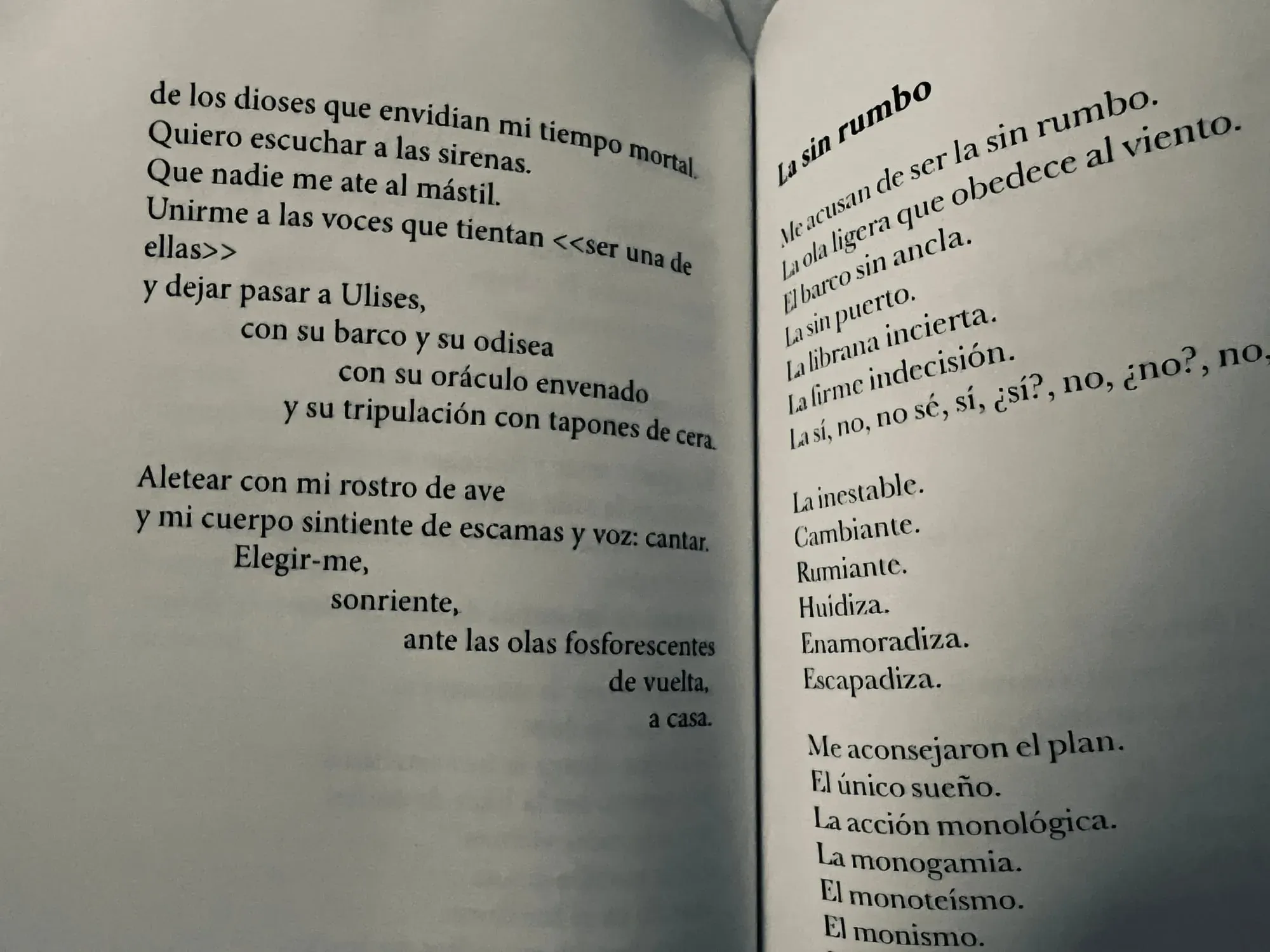
Princesa Hernández wrote a poem called Sirenas. It ends with a woman who refuses to be tied to the mast, who wants to hear the singing and let Ulysses pass with his ship and his wax earplugs; who chooses to beat her wings with her bird's face and her body of scales and voice, smiling, before the phosphorescent waves, on her way home. Ángeles Rodríguez read it and wanted to dance it. And there was the usual problem: the music did not exist.
Almost always dance starts from music: a piece exists and the body accommodates itself to it, to its tempo, its length, the climaxes somebody else decided. This time we did it the other way around. First there was the poem, and then the question of what music that poem needed in order to become a body.
Three sections and two seams.
Ángeles and I turned the poem into a piece in three sections: an instrumental opening, the poem sung, and an instrumental close. Each section was generated separately with artificial intelligence, and the three were joined in a free editor, with no mastering, in one afternoon. It sounds like a shortcut and it is the opposite: it is the only way for the changes to land where the choreography asks for them, and not where the machine felt like putting them. Stage time is controlled at the editing table. What did not take an afternoon was the road to get there: seven sessions of about two hours, from the idea to the final mix, with many tests, hours of discards, curating and iteration; and another seven of three hours, of dance training, so the body could learn the piece.
The whole song is above, with its three sections marked. Tap The poem, sung and hear how the opening fades and the voice comes in; tap Instrumental close and hear how the voice withdraws. Those two seams are the entire method. What sounds between them is Princesa's poem, sung by a voice that does not exist, over music that did not exist an hour earlier.
Opening night.
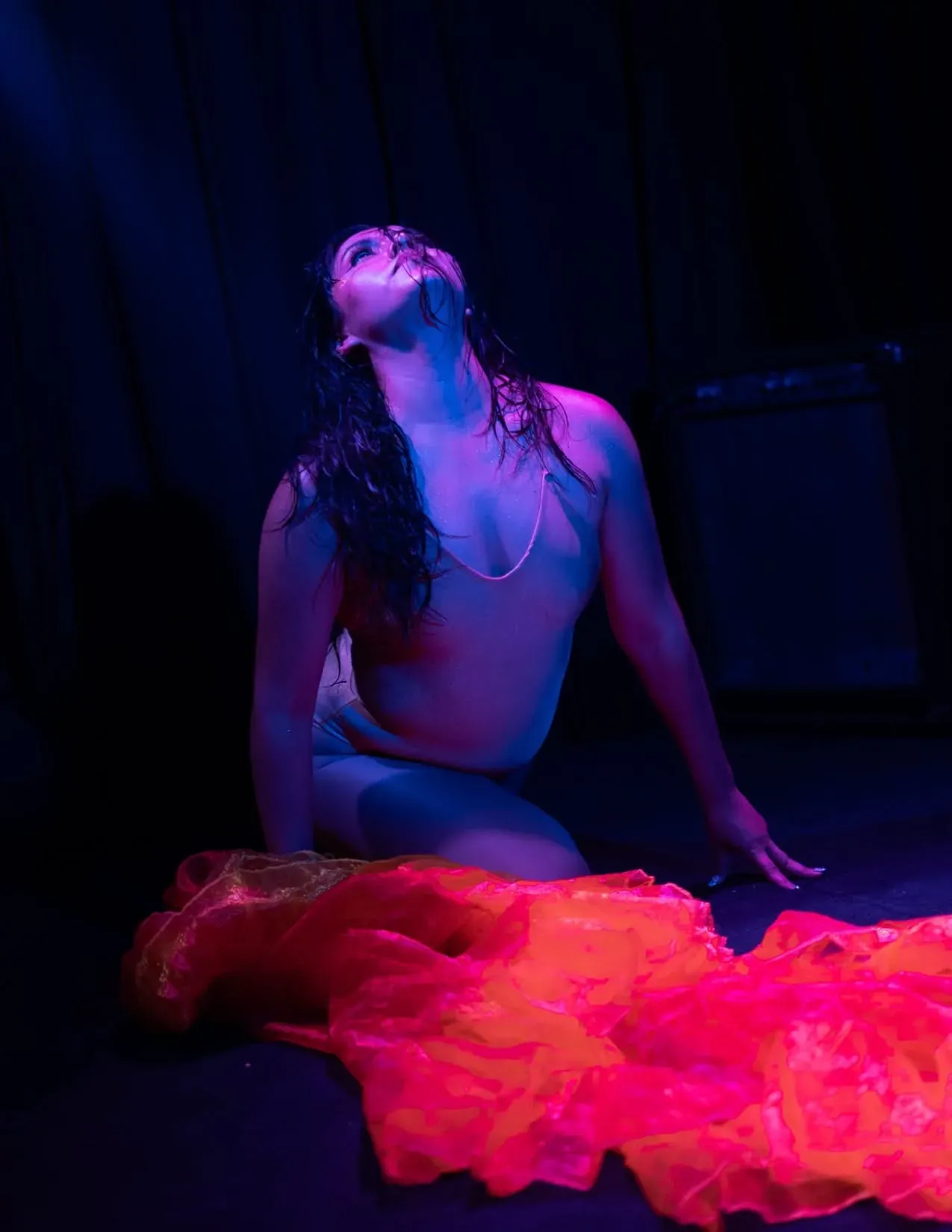
Sirena Interior premiered in December 2025 at Breve Espacio, in Puebla: a small venue, the audience an arm's length away and blue light falling on the black curtains. First the poem was read, standing, book in hand and a microphone. Then the music came in. On the instrumental opening, Ángeles appeared among the tables, not on the stage: she danced among the people, the pink and orange veil opening like a fin, and rose toward the light while the voice began to sing the lines we had just heard. When the poem faded and the close came in, she was already on the floor, veil spread wide, looking up. The cover photograph is that instant.
The audience did not applaud an experiment. They applauded a dancer and a song, and on the way out they asked about both: who was dancing, and whose music that was. The second question did not have a short answer, and that is why this text exists.
The room did not see an experiment. It saw a work.
She set the rule.
Music in dialogue with the body and its movement: music and dance accompanying and completing each other. That is Ángeles's rule, founder, president and director of Ollin Cuauchinanco A.C., an Associated School of Artistic Initiation of Mexico's INBAL within the PNEIAA, in Huauchinango, Sierra Norte de Puebla. She created the dance on that piece and danced it, and since the premiere she has not stopped dancing it. In her own words:
Starting from Princesa's poem Sirenas, I imagined the language of the body and began to idealize the music. It was then, with Arturo's poetic intelligence, when he showed me what Suno could do, that a sonic habitat was born for Sirenas, one the body finally came to inhabit through dance.
— Ángeles Rodríguez
The tour.
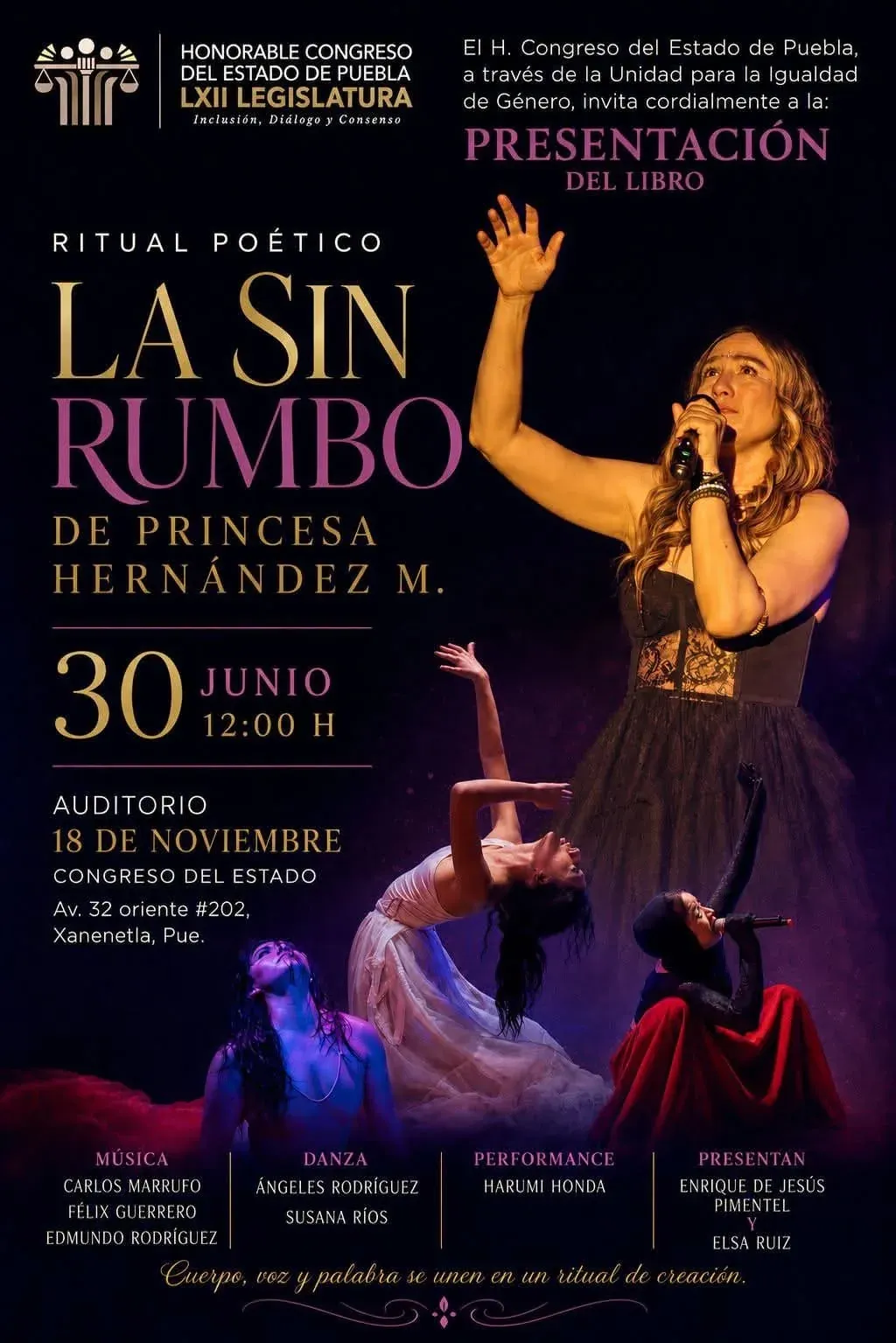
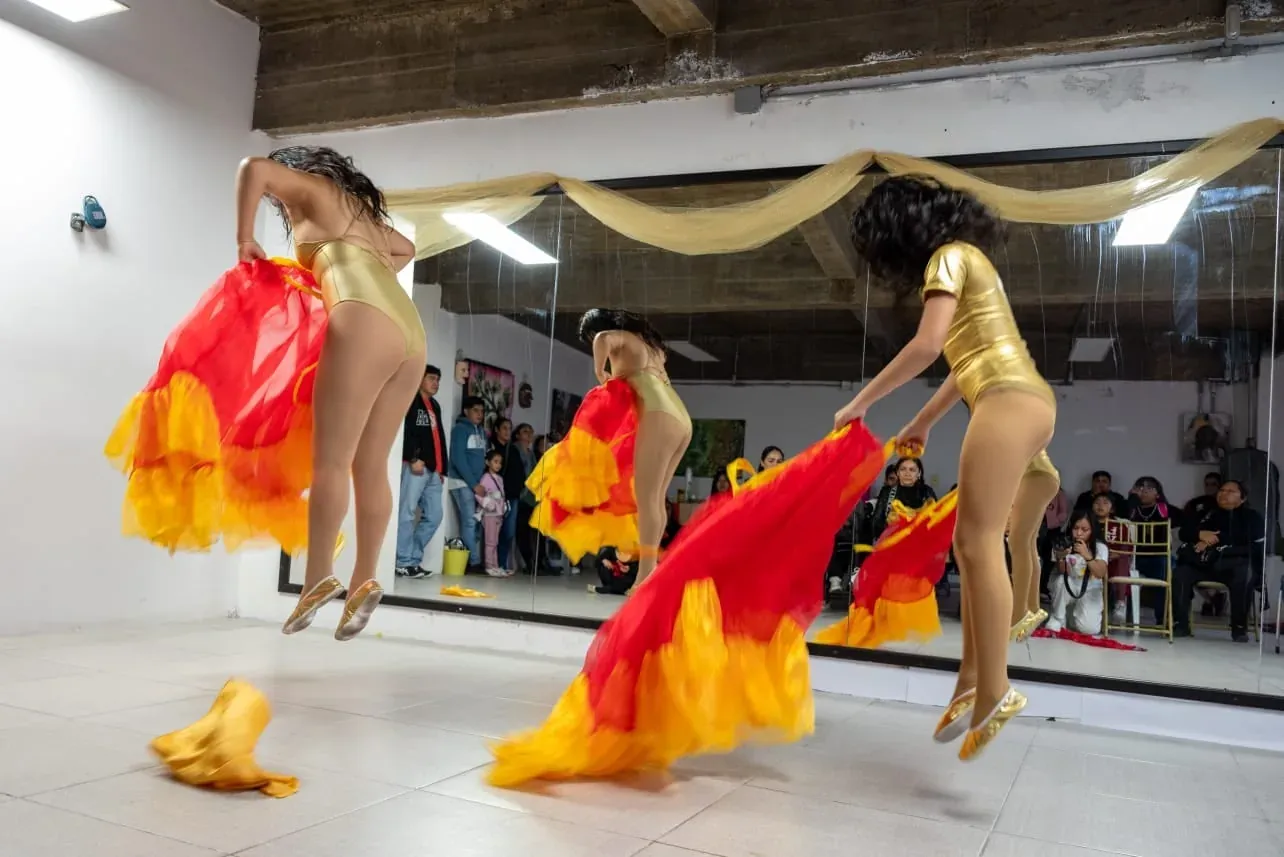
The piece lives on the tour Presentación del libro La sin rumbo, by Princesa Hernández: more than twelve performances, and still running. It has passed through small venues, through a hall of mirrors, and through the 18 de Noviembre Auditorium of the Puebla State Congress. Night after night, the audience singles out two things on the way out: the music and the dance number.
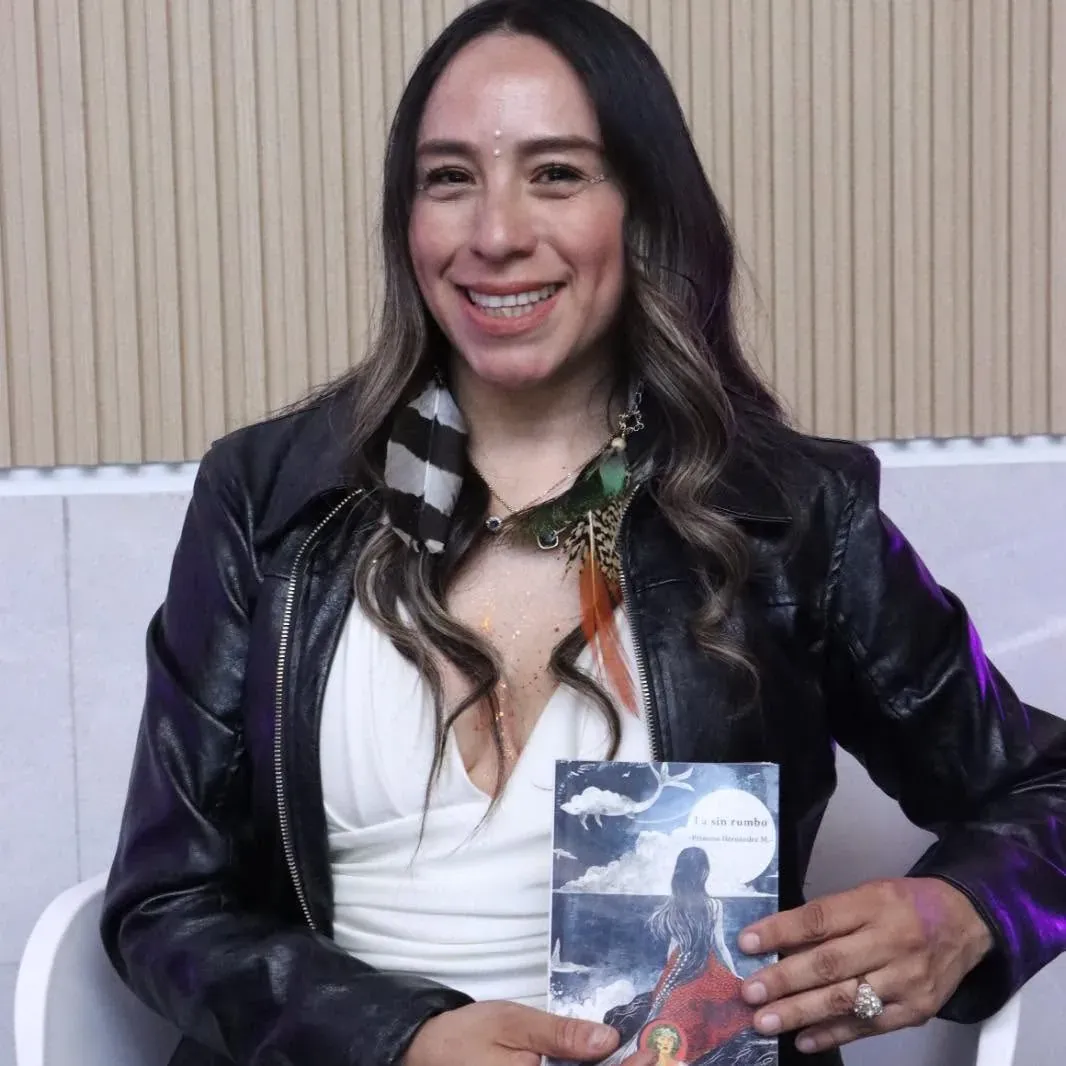
One night on tour, Carlos «Charly» Marrufo, of Breve Espacio, accompanied Sirena Interior live on his accordion, with Félix Guerrero on guitar. A piece made with artificial intelligence and two flesh-and-blood musicians playing on top of it, at the same time. It worked, and it was one of the best nights of the tour.
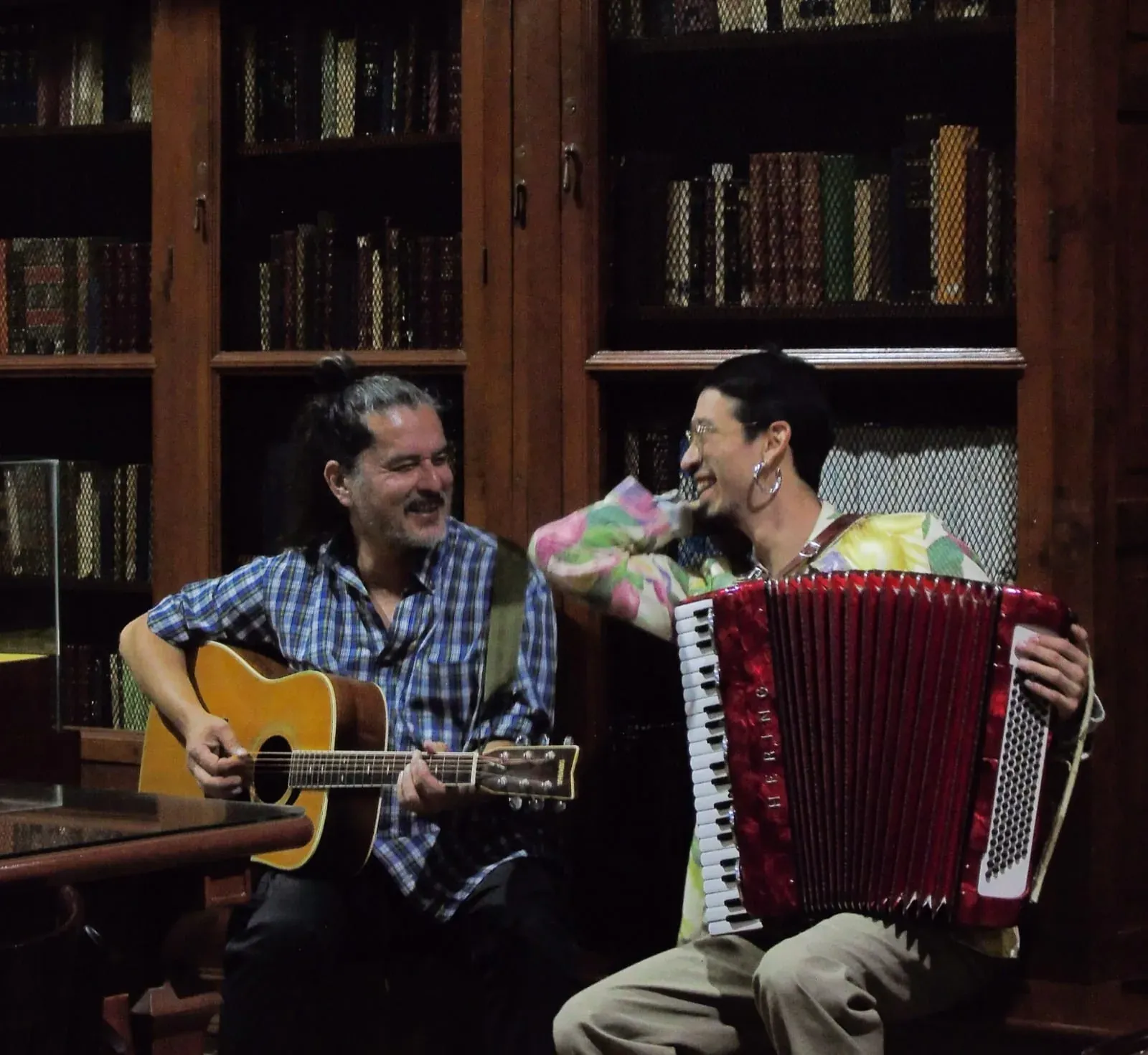
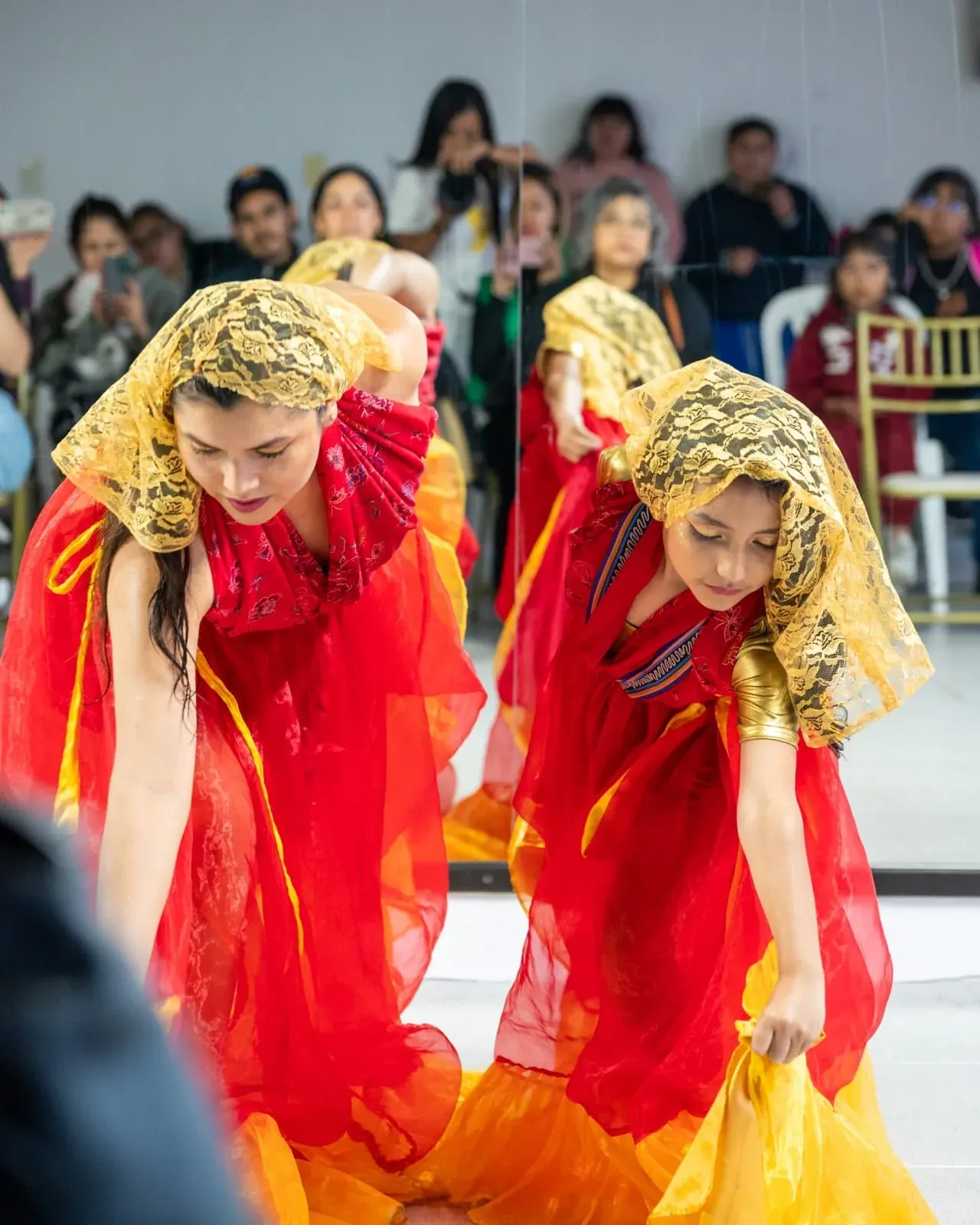
And the piece has been danced by Alis, nine years old, a student at Ollin Cuauchinanco: first the number together with her teacher Ángeles, in gold lace veils, and then alone, at the graduation of the Centro Escolar General Rafael Cravioto Pacheco high school. Music born out of a poem and a machine, danced by a girl in front of a graduating class.
What it proves.
A stage creator can stop depending on somebody else's music. She can arrive with the work she wants to make and leave with the music that work needed, with the changes landing on the second her body asks for. Until very recently, that cost a composer, a studio and months.
And it proves that the method travels. Out of Sirena Interior came a course-workshop, Music for Dancers, presented jointly by Ollin Cuauchinanco and Syncron iA: seven steps so that a company, a school or a dancer can make their own music without me in the room. The method outlives whoever invented it.
What has to be said carefully.
The rights. The platform we generated the sections with does not guarantee copyright over what it produces. Our position is stronger the more human work sits on top: the editing, the assembly, the poem, the choreography. In this case there is a great deal.
If you got this far without hitting play, scroll back up. The whole song is at the top, with its three sections. Listen to it and look for the two seams: where the opening ends and the poem begins, and where the poem fades and the close comes in. The entire method is there, and everything else started there too.